Aquarium maintenance schedule: daily, weekly, yearly
What to do daily, weekly, monthly, and yearly to keep your tank thriving for decades. The full task calendar.
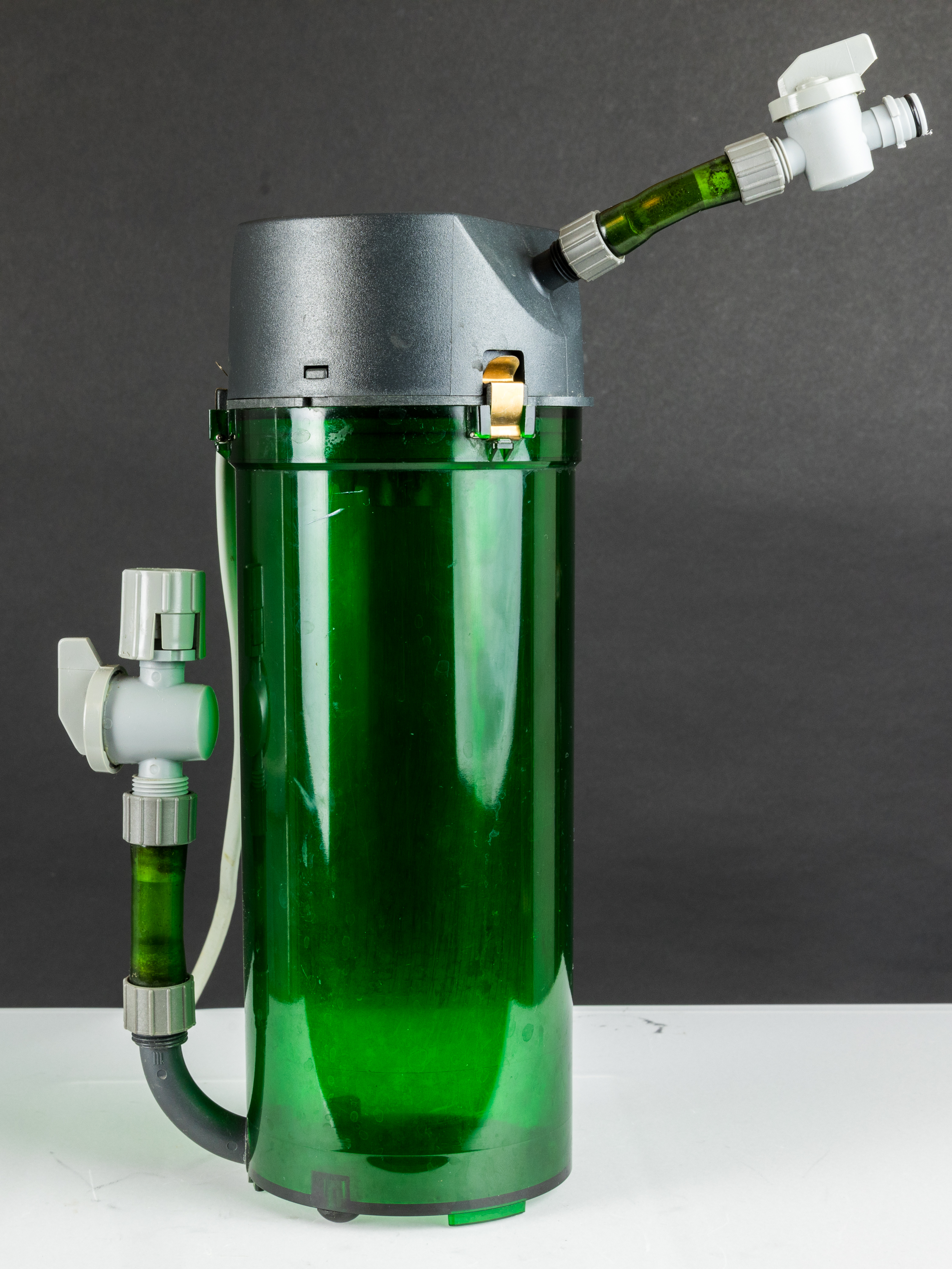
An aquarium is a living ecosystem and it runs on rhythm. Without a maintenance schedule sediment builds up, the filter clogs, algae move in — and within six months you'll be doing a full reboot.
This guide is a practical calendar by frequency. Every item is a habit, not optional.
Daily (2–3 minutes)
• Feed once or twice — only as much as the fish finish in 2 minutes. Skim any leftovers. • Lights on/off by timer (or manually at fixed times). • Quick scan: are all fish present, anyone lethargic, any large dead bodies? • Check temperature on the thermometer.
If something's off — note it. Don't react at night: tanks look worst then and most things normalise by morning.
Weekly (20–30 minutes)
20–30 % water change
The single most important task. Vacuum the substrate, especially food-debris hot spots. Prepare fresh water in advance: dechlorinated (Prime, AquaSafe), temperature-matched (±1 °C), pH and hardness in range.
Glass cleaning
Use a magnet scrubber or blade for the inside; outside glass — soft cloth with vinegar for limescale along the waterline.
Pre-filter rinse
Rinse the pre-filter sponge (if you have one) in the tank water you're draining. NEVER tap water — chlorine will kill the colony in 30 seconds.
Water tests
Minimum: NO₃ and pH. Once a month also NH₃, NO₂, gH, kH. In a new tank (first 8 weeks) — all five parameters weekly.
Plant fertilisers
If you use liquid all-in-ones — follow the manufacturer schedule. Root tabs — every 2–3 months under heavy root feeders.
Monthly (45–60 minutes)
Deep filter clean
Every 4–8 weeks rinse the main sponges in tank water. Do NOT touch the biological media (ceramic rings, bio balls) — those host the bacterial colony. Touch them only when flow drops noticeably.
Hose and intake cleaning
Slime builds up inside hoses and chokes flow. Use a wire brush or flexible scrubber. Remove the filter intake screen and clear debris.
Equipment check
Heater — check accuracy with a second thermometer (±0.5 °C is fine). Lights — look for a 'pink' tint that means the lamp is aging. Pumps and air pumps — no grinding noises.
Plant trimming
Stem plants — cut at the top and replant the tip in the substrate. Root plants (anubias, echinodorus) — remove yellowing leaves. Don't bin trimmings immediately: leaving them as a snack for shrimp adds value.
Stocking audit
Count every fish individually. Compare to last month. Missing fish are a cue to check water parameters and rethink tankmate compatibility.
Quarterly (every 3 months)
Photoperiod review
Winter ~8 h, summer ~6 h — shorten in summer to compensate for sunlight leaking through windows. Otherwise algae are inevitable in summer.
Carbon and adsorbent replacement
Activated carbon works for 4–6 weeks then becomes useless. Zeolite — 2–3 months. If you use either, swap on schedule.
Test kit and pH-meter calibration
Calibrate the pH-meter with 4.0 and 7.0 buffer solutions. Check liquid tests for expiry dates — old reagents lie.
Yearly
Full inspection
Remove all equipment, inspect silicone seams (cracks = replace silicone or, worst case, the tank). Replace cloudy suction cups and worn clips.
Lamp replacement (if not LED)
Fluorescent T5/T8 — once a year, spectrum loses 30 % in 12 months. LEDs last 2–3 years; the indicator is plants — if growth slows without other causes, replace.
Filter capacity audit
Real-world filter throughput by year's end is often 60–70 % of the spec sheet (hoses, biomass). If flow is weak and cleaning doesn't help — replace the pump or upgrade the filter.
Substrate replacement (optional)
Aquasoil exhausts in 1.5–2 years: stops lowering pH, accumulates nitrate. Gravel and sand — essentially permanent.
Never do this
• Don't rinse the filter under tap water — chlorine kills the colony in 30 seconds. • Don't change more than 50 % at once without a real emergency — that's a parameter shock. • Don't leave equipment unattended for over 2 weeks (vacation > 14 days — set up an auto-feeder and ask a neighbour to glance in).
Toolkit
• Gravel vacuum with hose (Ø 14–25 mm) and a 10–15 L bucket — for water changes. • Magnet glass scrubber. • Liquid test kit or electronic multi-tester. • Water conditioner (Prime/AquaSafe). • Thermometer (electronic + a spare alcohol one). • Hose brush. • Stainless steel plant scissors. • Large and small nets.
Twenty consistent minutes a week is what turns an aquarium from a chronic problem into a source of joy. Mature tanks don't exist without a schedule.
FAQ
- Can I skip a water change for one week?
- One week — yes, no consequences, if the tank is mature and not overstocked. Two weeks in a row — already risky: nitrates spike, algae appear. Better small and regular (10–15 % weekly) than 50 % once a month.
- How do I keep the tank running while on vacation?
- Up to 7 days: do nothing — the fish will hold. 7–14 days: an auto-feeder with a pre-mixed diet plus a neighbour glancing in once a week. Over 14 days: arrange for someone to do water changes every other week and watch the temperature.

Goldie editorial team
Practising aquarists with a combined 30+ years of experience · Biologists and editors, fact-checking against FishBase and Seriously Fish · Every piece is reviewed by a qualified ichthyologist before publication

Veterinary ichthyologist, specialist in aquarium fish diseases
DVM in veterinary medicine, University of Milan · PhD in hydrobiology, specialising in ornamental fish diseases · 10+ years of private veterinary practice with aquatic species
Sources
- Practical Fishkeeping — Maintenance routine · Practical Fishkeeping · 2026-05-22
- Aquarium Co-Op — Weekly maintenance · Aquarium Co-Op · 2026-05-22