Aquarium fish behaviors: 12 signs and what they mean
Fish don't bark or meow, but they 'speak' through behavior. Learn to read signs of stress, sickness and breeding.
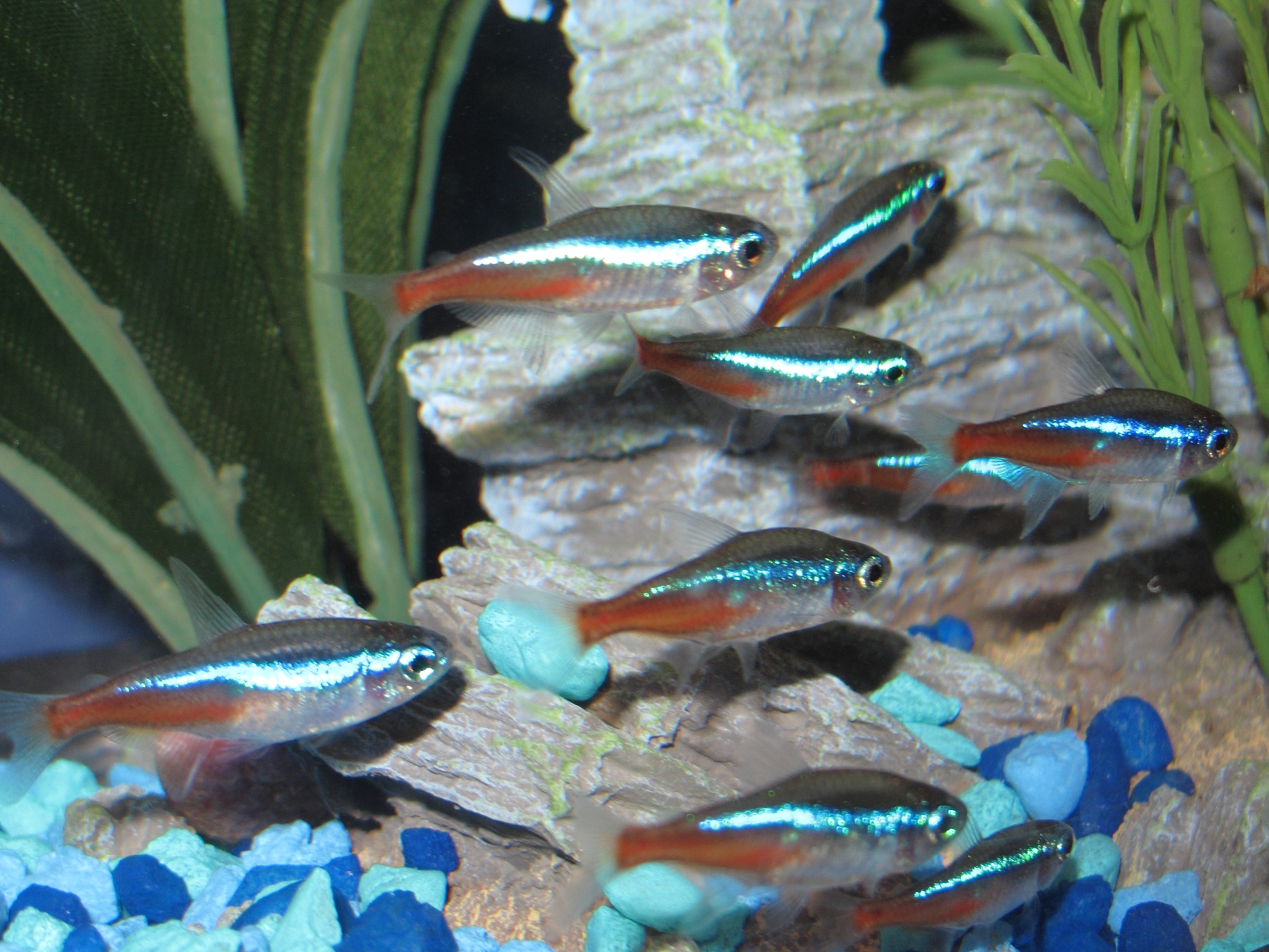
Careful behavior observation is the aquarist's best diagnostic tool. Illness shows up 2–3 days before visible symptoms, fish-vs-fish conflict a week before injuries. Here are the key signals.
1. Hiding in a corner
A stress response. Causes: new fish, aggressive tankmate, poor water (ammonia), bright light, noise. Check water tests and tankmate composition.
2. Gulping air at the surface
Urgent! Oxygen shortage or ammonia poisoning. Boost aeration, do a 30–50 % water change, test the water.
3. Scratching on rocks and decor
Itch from parasites (ich, argulus, lernaea) or bad water. White spots visible — treat ich immediately.
4. Swimming tilted or sideways
Swim bladder issue. In goldfish: overfeeding/constipation. In others: bacterial infection or kidney disease. Fast 3 days, then a soaked pea.
5. Clamped fins
Universal 'I feel bad' signal. Could be stress, illness, bad water. Compare to baseline — if fins stay clamped for over a day, hunt the cause.
6. Male flaring fins at another male
Dominance display. In bettas, gouramis, cichlids — can escalate to fighting. Add cover or separate.
7. Female swollen, guarding a corner
Spawning is imminent. Prep a spawning tank, don't startle, no water change on the spawn day.
8. Yawning (mouth open)
Normal if rare — they clear gills. Constant yawning = oxygen shortage or gill irritation.
9. Color change (paling or darkening)
Stress, illness, or submission to a stronger neighbor. Sudden darkening in cichlids often means they're about to attack.
10. Off food for 2+ days
A red flag. 1 day off is normal (especially after transport), 2–3 days = illness or bad water. Check parameters and appearance.
11. Hovering in place, breathing slowly
Possibly: poisoning, chill, end of life (for old fish). Check temperature and water tests immediately.
12. Chasing without bites
Territory display, normal for sharks, cichlids. If other fish are exhausted and corralled — remove the aggressor.
An aquarist who spends 10 minutes by the tank in the morning and 10 in the evening sees problems days before they turn fatal.
FAQ
- What if a fish blinks often or rolls its eyes?
- Gill irritation from bad water or chemicals (chlorine, metals). 50 % water change with remineralized RO water, test ammonia/nitrite.
- Why does a fish swim 'diagonally' up and down?
- Could be normal (space exploration) or a nervous-system parasite. If other symptoms of illness — quarantine.

Goldie editorial team
Practising aquarists with a combined 30+ years of experience · Biologists and editors, fact-checking against FishBase and Seriously Fish · Every piece is reviewed by a qualified ichthyologist before publication

Veterinary ichthyologist, specialist in aquarium fish diseases
DVM in veterinary medicine, University of Milan · PhD in hydrobiology, specialising in ornamental fish diseases · 10+ years of private veterinary practice with aquatic species
Sources
- Practical Fishkeeping — fish behavior signs · Practical Fishkeeping · 2026-05-29
- Seriously Fish — behavior notes per species · Seriously Fish · 2026-05-29