The nitrogen cycle in aquariums: cycling without losses
What happens in the filter during the first 4 weeks, and why you must not add fish sooner.
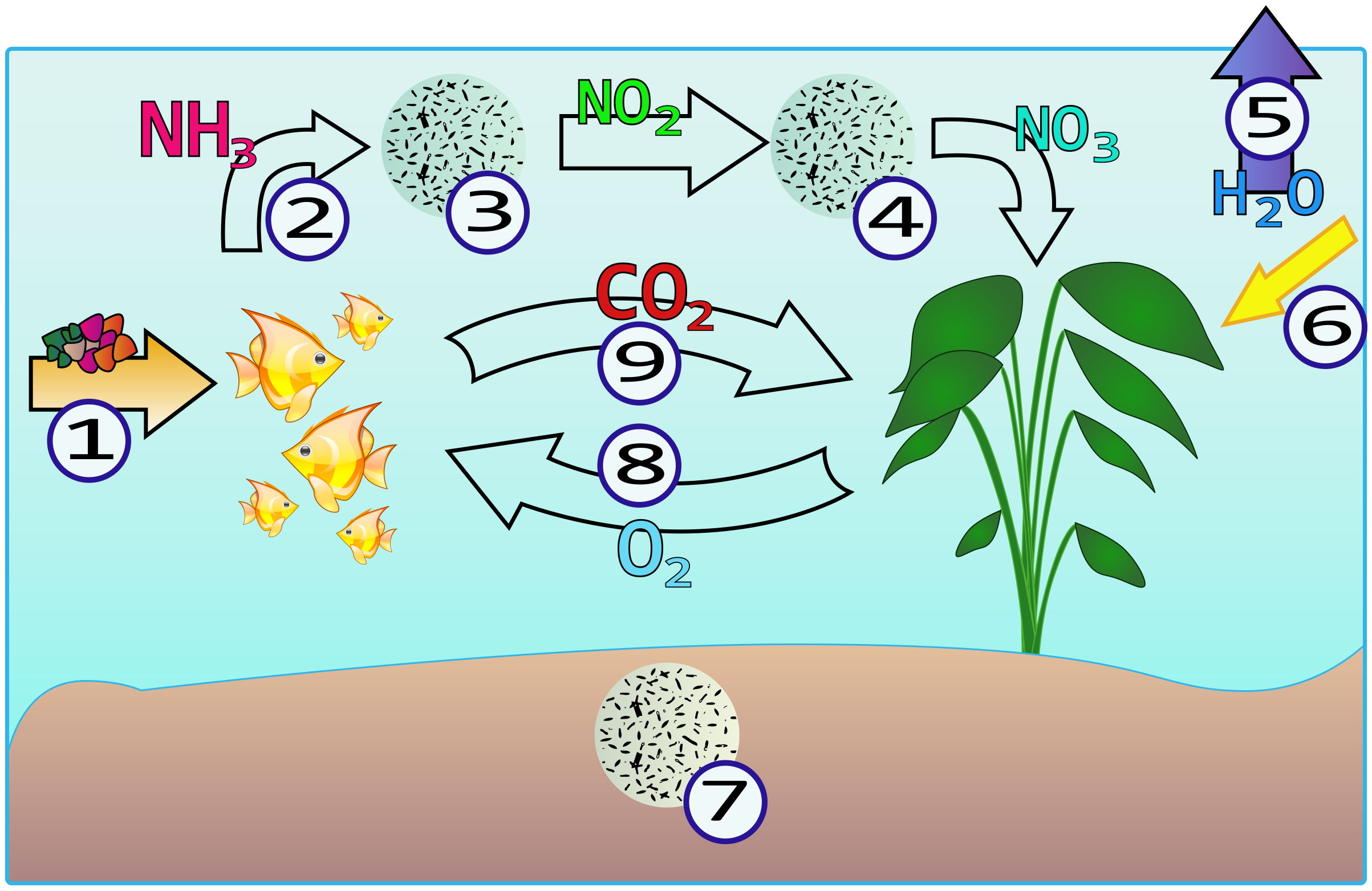
The nitrogen cycle is the main biological foundation of an aquarium. Understanding it eliminates 80% of fish-loss problems beginners run into.
What happens in an aquarium
Fish excrete ammonia (NH₃) — a highly toxic substance. In nature it is diluted by huge volumes of water; in an aquarium, its concentration quickly becomes lethal.
Bacteria of the Nitrosomonas genus convert ammonia into nitrite (NO₂⁻) — almost equally poisonous. Nitrobacter (and Nitrospira) then convert nitrite into nitrate (NO₃⁻) — relatively safe for fish at moderate concentrations.
Full cycle: NH₃ → NO₂⁻ → NO₃⁻. Nitrate accumulates and is removed by water changes and absorbed by plants.
Cycling time
Nitrosomonas bacteria multiply in 7–14 days. Nitrobacter — in 14–21 days. The full cycle establishes in 3–4 weeks given a source of ammonia.
Fishless cycling
The most humane method. Every 2–3 days add ammonia (household solution without surfactants) up to 2–3 mg/L. Test with strips or liquid kits. The cycle is complete when ammonia and nitrite read 0 and nitrate is accumulating.
Cycling with test fish (deprecated)
Adding 1–2 hardy fish (zebra danio). Modern aquarium ethics rejects this — fish endure severe stress. Fishless cycling is better.
Signs the cycle is done
Tests show:
• Ammonia (NH₃/NH₄⁺): 0 mg/L
• Nitrite (NO₂⁻): 0 mg/L
• Nitrate (NO₃⁻): 10–40 mg/L
After a week of stable zeros on the first two — you can add fish. In phases, never all at once.
What speeds up the cycle
• Bacterial starters (Tetra SafeStart, Seachem Stability) — contain live cultures. They shorten the cycle to 1–2 weeks.
• Using some substrate or filter media from a running aquarium.
• Temperature 26–28 °C — bacteria are more active.
• Good aeration — nitrifying bacteria are aerobic.
What slows or breaks the cycle
• Any antibiotics and most algicides.
• Chlorine/chloramine in tap water — kills bacteria. Use a conditioner.
• Hot water input (>32 °C).
• Rinsing the filter under the tap — chlorine kills bacteria. Rinse only in aquarium water.
The safest strategy is to cycle the tank without fish, with an ammonia source, and wait four weeks. The money saved on "test fish" pays for itself many times over later.
FAQ
- Can bacterial starter products speed up the cycle?
- Yes, down to 1–2 weeks. You still need to test the water either way — some starters work much better than others.
- Do I need water changes during cycling?
- No, if you're doing fishless cycling. If fish are already in, change water whenever NH₃ or NO₂ exceed 0.5 mg/L.

Scientific board — ichthyologists and veterinarians
Ichthyologists and veterinarians with university degrees · Reference FishBase, Seriously Fish and peer-reviewed literature · Sign every reviewed article with their credentials shown

Senior aquarist, breeder, show judge
27+ years in aquaristics · Certified IAPLC judge (International Aquatic Plants Layout Contest) · Registered breeder of an Apistogramma agassizii line
Sources
- Fritzpet — Nitrogen Cycle Guide · Fritz Aquatics · 2026-05-22
- Seriously Fish — Cycling · Seriously Fish · 2026-05-22