Saprolegnia (fungus) on fish and eggs — treatment and root causes
White cotton-like tufts on wounds, fins or eggs. The fungus is an opportunist — it only attacks already-stressed fish. The key to treatment is removing the underlying cause (injury, bad water, stress); the fungus itself comes off easily with methylene blue.
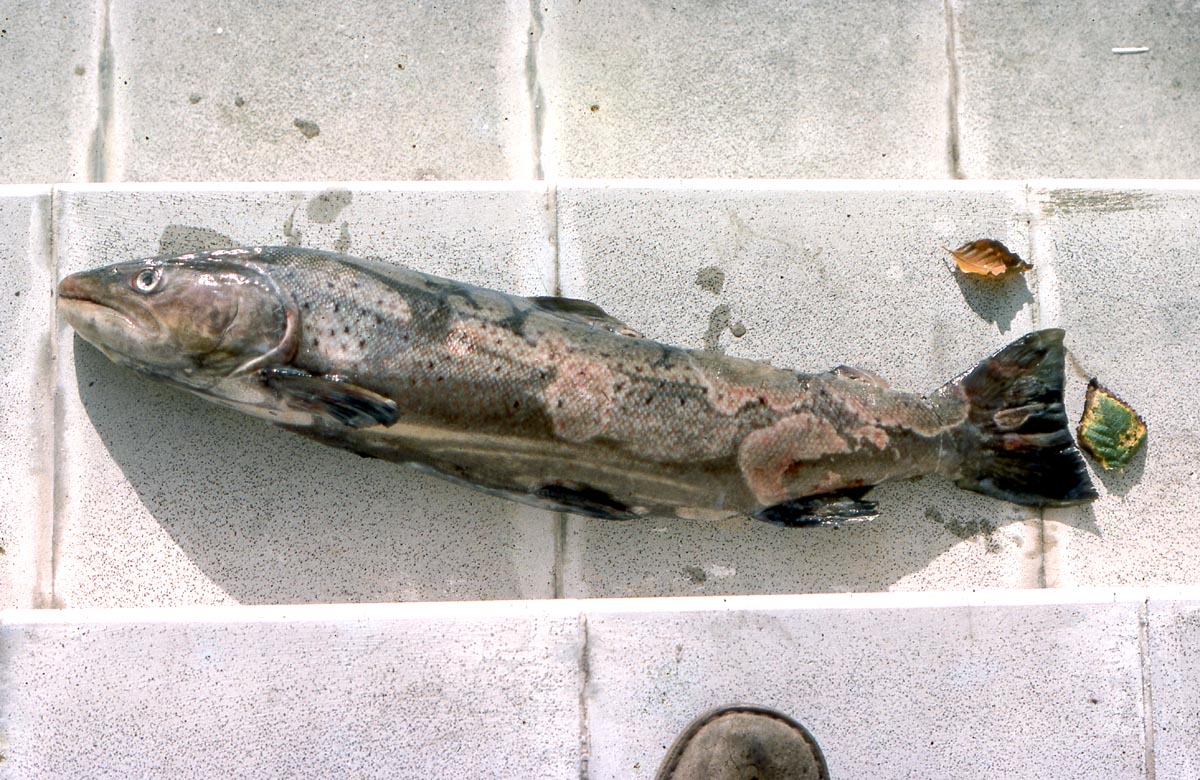
Saprolegnia spp. is an oomycete found everywhere in fresh water. It doesn't attack healthy uninjured fish — in nature its job is to break down dead organic matter. A white cotton tuft on a fish is less a fungus problem and more a sign of injury, bad water or weakened immunity.
Symptoms: white or grey cotton tufts on wounds, at fin bases, on flanks, in the mouth. On eggs — a fuzzy whitish coat. On live fish it's usually localised (around the injury); on eggs it can cover the whole clutch in 24 hours. Unlike columnaris, the fungus peels off easily with tweezers — long fibres, not a dense coating.
Treatment
In a hospital tank: methylene blue per label (usually 2–3 mg/L) for 5–7 days; OR malachite green at 0.1 mg/L; OR aquarium salt at 3–5 g/L (not for tetras or corydoras). Remove activated carbon — it absorbs the dye. In parallel — find and remove the cause: test water, separate aggressive tankmates, provide calm.
For eggs: methylene blue at 1–2 mg/L preventively from spawning — standard breeding practice. Treating healthy fish without cause is pointless: saprolegnia is always in the water but never attacks without an 'invitation' (injury + weakened immunity). Prevention — stable water quality, varied food, no chronic stress.
FAQ
- How do I tell saprolegnia from columnaris?
- Saprolegnia is long fluffy fibres, easily lifted with tweezers, usually around a fresh injury. Columnaris is a dense coating fused into the skin and appears on uninjured areas. The two need completely different drugs — confusing them is critical.
- Can I catch saprolegnia from my fish?
- No. Saprolegnia spp. is a pathogen only of aquatic organisms; it is harmless to humans and warm-blooded animals.
- Why dye the water blue with methylene blue — doesn't it scare the fish?
- It doesn't — fish adapt within hours. The dye acts as an electron donor that binds oxygen and is toxic to the fungus. A carbon filter strips it from the water within a day, which is why carbon is removed during the course.

Scientific board — ichthyologists and veterinarians
Ichthyologists and veterinarians with university degrees · Reference FishBase, Seriously Fish and peer-reviewed literature · Sign every reviewed article with their credentials shown

Veterinary ichthyologist, specialist in aquarium fish diseases
DVM in veterinary medicine, University of Milan · PhD in hydrobiology, specialising in ornamental fish diseases · 10+ years of private veterinary practice with aquatic species
Sources
- Seriously Fish — Saprolegnia · Seriously Fish · 2026-05-31
- Practical Fishkeeping — Fungus · Practical Fishkeeping · 2026-05-31