Lake Tanganyika Shell-Dwellers Biotope (60L)
Hard alkaline (pH 8.2+) African Rift Valley shell bed engineered by a multigenerational Neolamprologus multifasciatus colony.
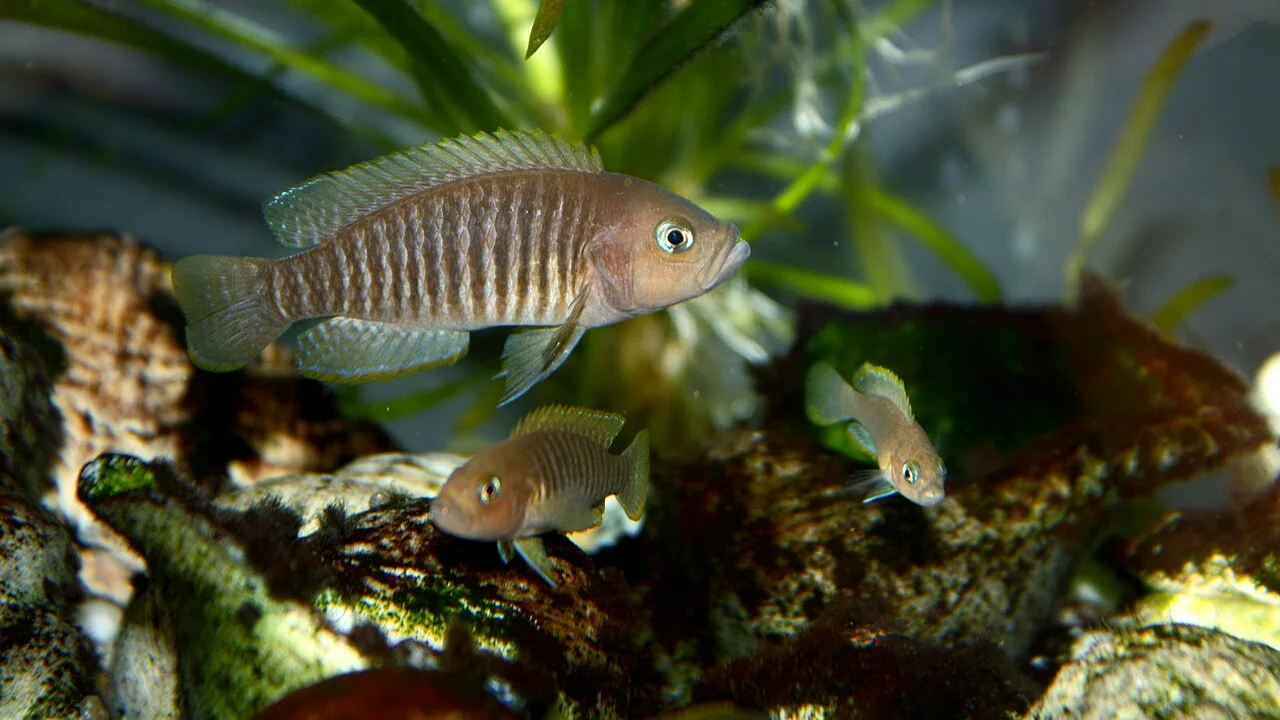
Deep on the sandy floor of East Africa's Lake Tanganyika lie vast beds of empty Neothauma snail shells inhabited by the world's smallest cichlid: Neolamprologus multifasciatus. In a 60-liter (16-gallon, 60×30×35 cm) tank, a starter colony of 6 'Multies' acts like tiny underwater bulldozers — excavating craters and building sand walls to define family territories.
Fine white aragonite substrate naturally buffers water to authentic Rift Lake parameters (pH 8.2–8.8, gH 12–20), while an internal filter with Venturi aeration keeps oxygen near saturation. Scatter 25–30 clean escargot or Neothauma shells across the sand and watch generations of fry emerge from shell doorways.
Fish (6)
- Multies× 6
Setup Checklist
Essential gear and water prep needed before adding fish
- ≈ $21Internal Filter with Venturi Aeration (500 L/h)Essential
Mount 6 cm above sand so digging Multies never blow sand into the impeller
- ≈ $22Fine White Aragonite / Coral Sand 0.5–1.2 mm (8 kg)Base
Buffers pH above 8.2 naturally while remaining light enough for 3 cm females to carry in their mouths
- ≈ $15Submersible Thermostat Heater (50W)Essential
Set to Lake Tanganyika's stable thermal layer of 25–26°C
- ≈ $12Water conditioner (dechlorinator)Essential
Seachem Prime or Tetra AquaSafe — instantly detoxifies chlorine, chloramine, and heavy metals
- ≈ $25Liquid drop test kit (pH, NH₃/NH₄, NO₂, NO₃)Recommended
API Freshwater Master Test Kit or liquid drop tests to monitor nitrogen cycle
- ≈ $15Fish net & gravel vacuum siphonCare
Soft fish net matched to fish size + gravel vacuum siphon for weekly 20–30% water changes
Decor
- Natural Neothauma / Food-Grade Escargot Snail Shells× 28
- Limestone Visual-Break Rocks (placed directly on bottom glass)× 3
Tips & gotchas
- Always place rocks directly onto bare bottom glass (or egg-crate) BEFORE pouring sand — digging Multies will undermine anything resting on sand!
- Provide at least 4–5 shells per fish (25–30 total) and swish new shells underwater to expel trapped air bubbles.
- If tap water is soft, dose 1/2 tsp baking soda (kH) + Rift Lake mineral salt at water changes to keep pH ≥ 8.2.
- Feed baby brine shrimp and micro-granules twice daily — fry grow up right alongside parents inside the colony.
Recommended Hardware
Internal Power Filter with Venturi Oxygen Aeration
Sponsored / Affiliate link
Fine Rift-Lake Aragonite & Coral Buffering Sand
Sponsored / Affiliate link
Natural Cichlid Breeding Shells & Cave Hideouts
Sponsored / Affiliate link