Ocellaris Clownfish
Amphiprion ocellaris · family Pomacentridae
Also: Common Clownfish, False Percula Clownfish, Nemo Fish
Parameters
- Temperature
- 24–27 °C
- pH
- 8.1–8.4
- Hardness
- 12–18 °dGH
- Tank volume
- from 80 L
- Maximum size
- up to 9 cm
- Group size
- min 1, ideal 2
- Temperament
- Peaceful
- Swimming zone
- Middle
- Difficulty
- Beginner
- Lifespan
- 8–15 years
Description
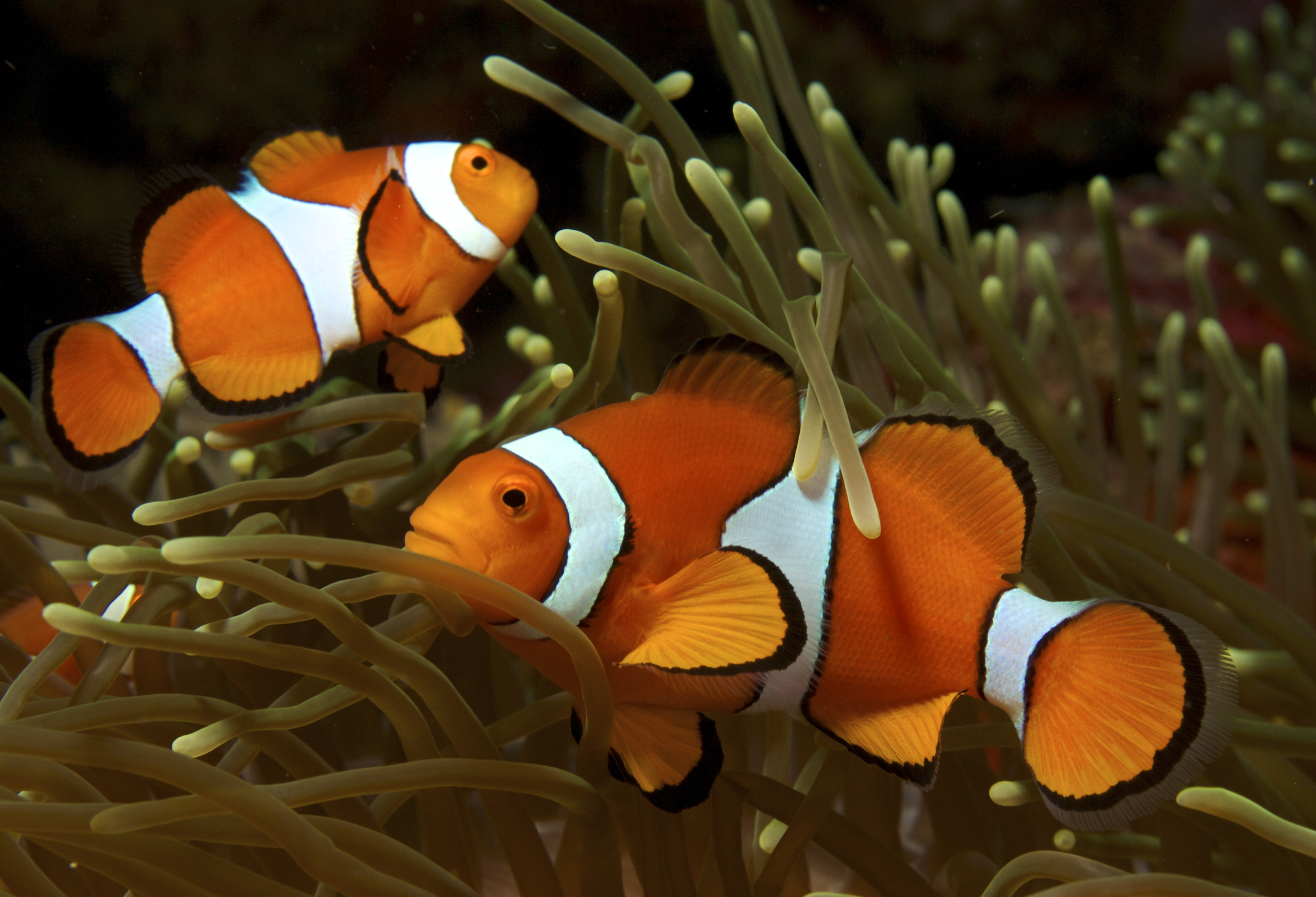
The Ocellaris Clownfish (Amphiprion ocellaris) is the world's most popular and hardy marine reef fish, instantly recognizable by its vibrant orange body and three black-edged white bars. Famous for its mutualistic symbiosis with stinging sea anemones, captive-bred Ocellaris thrive in nano-reef aquariums with or without a host anemone at specific gravity SG 1.023–1.025 and pH 8.1–8.4.
Care
Maintain a saltwater nano-reef of at least 80 liters (20 gallons) with live rock, specific gravity SG 1.023–1.025, a 360° magnetic wavemaker for reef circulation, and a surface/protein skimmer. Full setup guide: /articles/nano-reef-tank-setup-beginners-guide.
Feeding
Marine pellets with krill and spirulina, frozen Mysis shrimp, enriched brine shrimp, and copepods fed twice daily.
Breeding
Protandrous hermaphrodites: all juveniles start as males, and the largest dominant fish in a pair irreversibly transitions into the breeding female, laying eggs on rock near their host anemone.
Compatibility
- Skunk Cleaner Shrimp
Lysmata amboinensis
Полностью совместимы в рифовом аквариуме: креветка-доктор очищает воду и рыб от паразитов. / Completely reef-safe and peaceful together in nano and standard marine aquariums.
Good - Firefish Goby
Nemateleotris magnifica
Мирные соседи по нано-рифу, занимающие разные участки у камней. / Peaceful nano-reef tank mates that coexist harmoniously around live rock.
Good
FAQ
- Do Ocellaris Clownfish require a sea anemone in an aquarium?
- No. Captive-bred Ocellaris Clownfish thrive without an anemone and will happily host in soft corals (like Toadstool leather corals) or rocky overhangs.

Goldie editorial team
Practising aquarists with a combined 30+ years of experience · Biologists and editors, fact-checking against FishBase and Seriously Fish · Every piece is reviewed by a qualified ichthyologist before publication

Scientific board — ichthyologists and veterinarians
Ichthyologists and veterinarians with university degrees · Reference FishBase, Seriously Fish and peer-reviewed literature · Sign every reviewed article with their credentials shown
Sources
- FishBase: Amphiprion ocellaris · FishBase · 2026-05-22
- Seriously Fish: Amphiprion ocellaris · Seriously Fish · 2026-05-22