Neon Tetra
Paracheirodon innesi · family Characidae
Parameters
- Temperature
- 20–26 °C
- pH
- 5–7
- Hardness
- 1–10 °dGH
- Tank volume
- from 60 L
- Maximum size
- up to 4 cm
- Group size
- min 6, ideal 10
- Temperament
- Peaceful
- Swimming zone
- Middle
- Difficulty
- Beginner
- Lifespan
- 5–8 years
Health & Common Diseases
Key risks, vulnerability factors, and veterinarian-reviewed treatment guides.
Ich (White Spot Disease)
Prone during stress, cold drafts, or transport. Treat the entire tank at the first sign of white spots.
Description
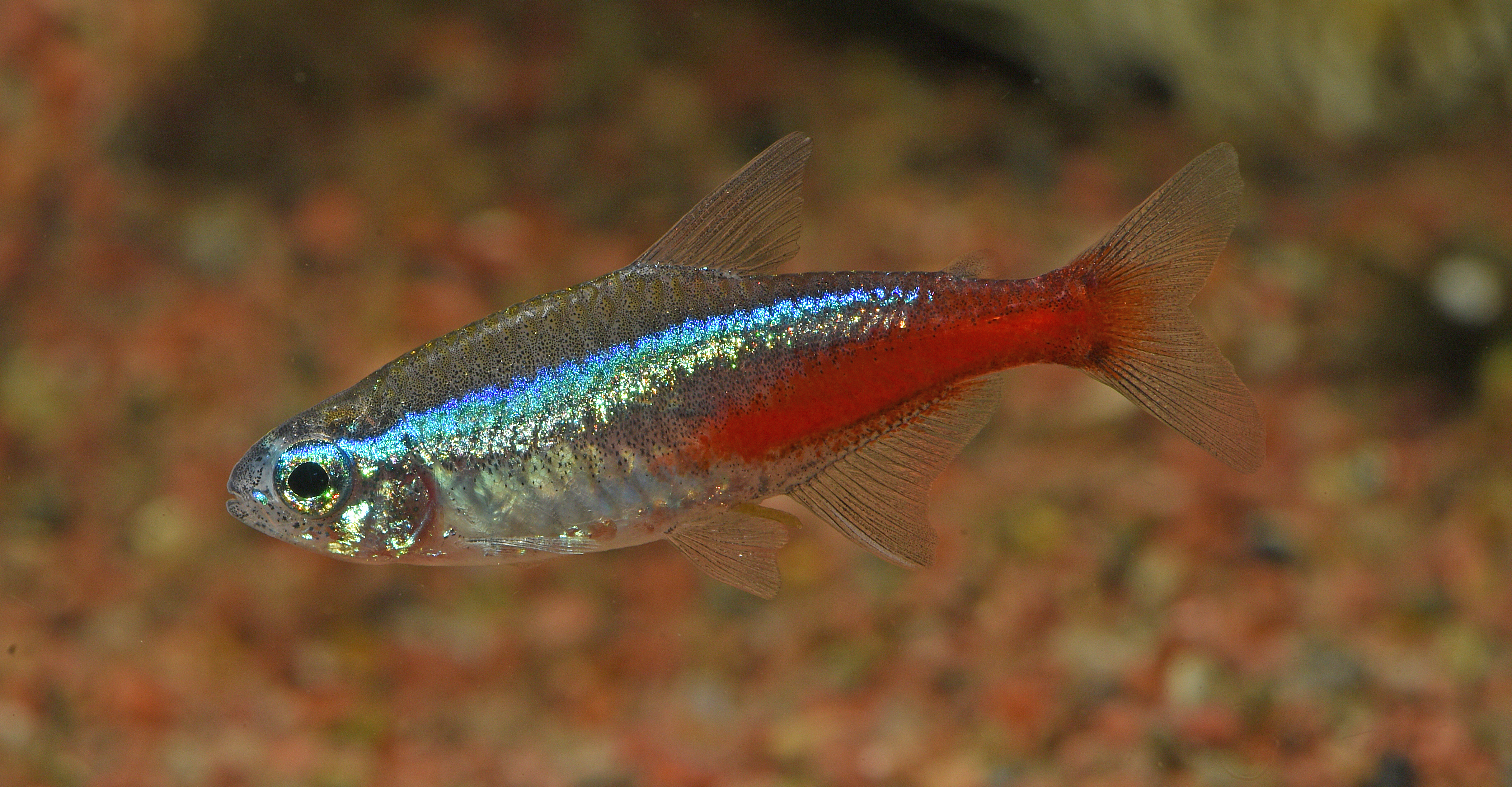
The neon tetra is one of the most popular aquarium fish thanks to its bright blue and red stripes that 'glow' under suitable lighting. Schooling, peaceful, undemanding about diet.
In the wild they live in shaded tributaries of the Amazon with soft, acidic water and a dark bottom. They look their best in densely planted, shaded biotopes with a dark substrate.
Care
Water parameters
Ideal: 22–24 °C, pH 6.0–6.8, gH 2–6. 25% weekly water changes with aged water.
Layout
Densely planted tank with shaded refuges: java moss, anubias, floating plants for diffused light. Leave open swim space in the center for the school.
Feeding
High-quality flakes for small tropicals + frozen or live foods (daphnia, brine shrimp, cyclops) 2–3 times a week. Feed once or twice a day in small portions.
Breeding
Bred in a separate spawning tank with soft, acidic water (pH 5.5–6.0, gH < 4), dense moss for spawning, and darkness. Eggs are light-sensitive. VERIFY: detailed breeding guide in a separate article.
Compatibility
- Good
- Ideal
- Good
- Caution
- Avoid
- Discus
Symphysodon aequifasciatus
Compatible by parameters, but discus need +28 °C — at the upper limit for neons.
Caution
FAQ
- How many neon tetras should be kept?
- At least 6, ideally 10 or more. In smaller groups or pairs, neons suffer chronic stress and die quickly.
- Are neon tetras suitable for beginners?
- Yes, but only in a mature tank that has been running for at least 4–6 weeks after the nitrogen cycle. Neons are very sensitive to freshly set up tanks.
- What is neon tetra disease?
- Pleistophora hyphessobryconis — a sporozoan that attacks muscle tissue. Incurable; affected fish should be isolated. Prevention: quarantine new fish and live foods.

Goldie editorial team
Practising aquarists with a combined 30+ years of experience · Biologists and editors, fact-checking against FishBase and Seriously Fish · Every piece is reviewed by a qualified ichthyologist before publication

Scientific board — ichthyologists and veterinarians
Ichthyologists and veterinarians with university degrees · Reference FishBase, Seriously Fish and peer-reviewed literature · Sign every reviewed article with their credentials shown
Sources
- FishBase: Paracheirodon innesi · FishBase · 2026-05-22
- Seriously Fish: Paracheirodon innesi · Seriously Fish · 2026-05-22