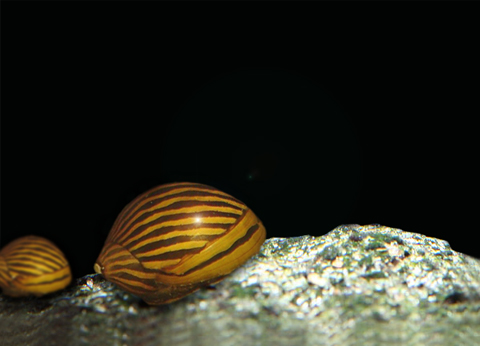
Zebra Nerite Snail
Neritina natalensis · family Neritidae
Also: Tiger Nerite Snail, Neritina natalensis
Parameters
- Temperature
- 22–26 °C
- pH
- 7–8.5
- Hardness
- 8–18 °dGH
- Tank volume
- from 15 L
- Maximum size
- up to 2.5 cm
- Group size
- min 1, ideal 3
- Temperament
- Peaceful
- Swimming zone
- Throughout
- Difficulty
- Beginner
- Lifespan
- 2–4 years
Description
The Zebra Nerite Snail (Neritina natalensis) is the gold-standard natural glass cleaner against stubborn Green Spot Algae (GSA) and brown diatoms. Unlike pest ramshorn or bladder snails, Nerites never touch living aquatic plants and cannot overpopulate freshwater tanks because their eggs require brackish water to hatch.
Care
Zebra Nerites need neutral to alkaline, moderately hard water (pH 7.0–8.5, GH 8–18 °dGH) to maintain their striped calcified shells without pitting or erosion. Acidic water below pH 6.8 slowly dissolves the shell periostracum. Check upright posture occasionally—if a Nerite falls upside-down on soft sand with nothing to grip, right it by hand—and keep a lid on the tank as they occasionally explore above the waterline.
Feeding
Strict herbivorous biofilm and algae grazer: its toothed radula scrapes hard spot algae (GSA) and diatom films off glass, rocks, and wood while leaving living plants untouched. Introduce only into matured aquariums (3–4+ weeks old) at 1 snail per 15–20 liters so natural algae growth sustains them.
Breeding
Gonochoristic (separate sexes). Females occasionally deposit small white sesame-seed-like egg capsules on driftwood or rocks, but the veliger larvae require brackish estuary water to develop—so zero snails ever hatch in freshwater aquariums.
Compatibility
- Amano Shrimp
Caridina multidentata
Flawless cleanup partnership: Amanos tackle hair algae while Nerites polish glass and stones.
Ideal - Danger
FAQ
- What are the tiny white sesame-seed dots on my driftwood after adding Nerite snails?
- Those are unhatched female Nerite egg capsules. They are completely harmless, will never hatch in freshwater, and gradually wear away over time.

Goldie editorial team
Practising aquarists with a combined 30+ years of experience · Biologists and editors, fact-checking against FishBase and Seriously Fish · Every piece is reviewed by a qualified ichthyologist before publication

Scientific board — ichthyologists and veterinarians
Ichthyologists and veterinarians with university degrees · Reference FishBase, Seriously Fish and peer-reviewed literature · Sign every reviewed article with their credentials shown
Sources
- FishBase: Neritina natalensis · FishBase · 2026-05-22
- Seriously Fish: Neritina natalensis · Seriously Fish · 2026-05-22