Fin Rot, Biting, or Tears? Real Reddit Cases, Pantyhose Test, and Safe Recovery
Blackened edges or overnight tears? We break down bacterial fin rot vs fin biting with real community photos, explain clear regrowth tissue, and detail the safe catappa protocol.
Symptoms & Differential Diagnosis: Rot vs Biting vs Tears
Fin damage in aquarium fish is one of the most common emergencies faced by owners of labyrinth species, especially the Betta fish, as well as fancy Goldfish. Successful recovery hinges on accurate differential diagnosis: bacterial infection, behavioral biting, and mechanical tearing require completely different responses.
• Bacterial Fin Rot (Aeromonas / Pseudomonas): progresses gradually over days or weeks. Hallmark signs include melted ray edges resembling burnt paper, with a distinct blackened, dark-brown or inflamed crimson margin. Left unaddressed, bacteria migrate toward the fin bases, causing body rot, systemic sepsis, or dropsy.
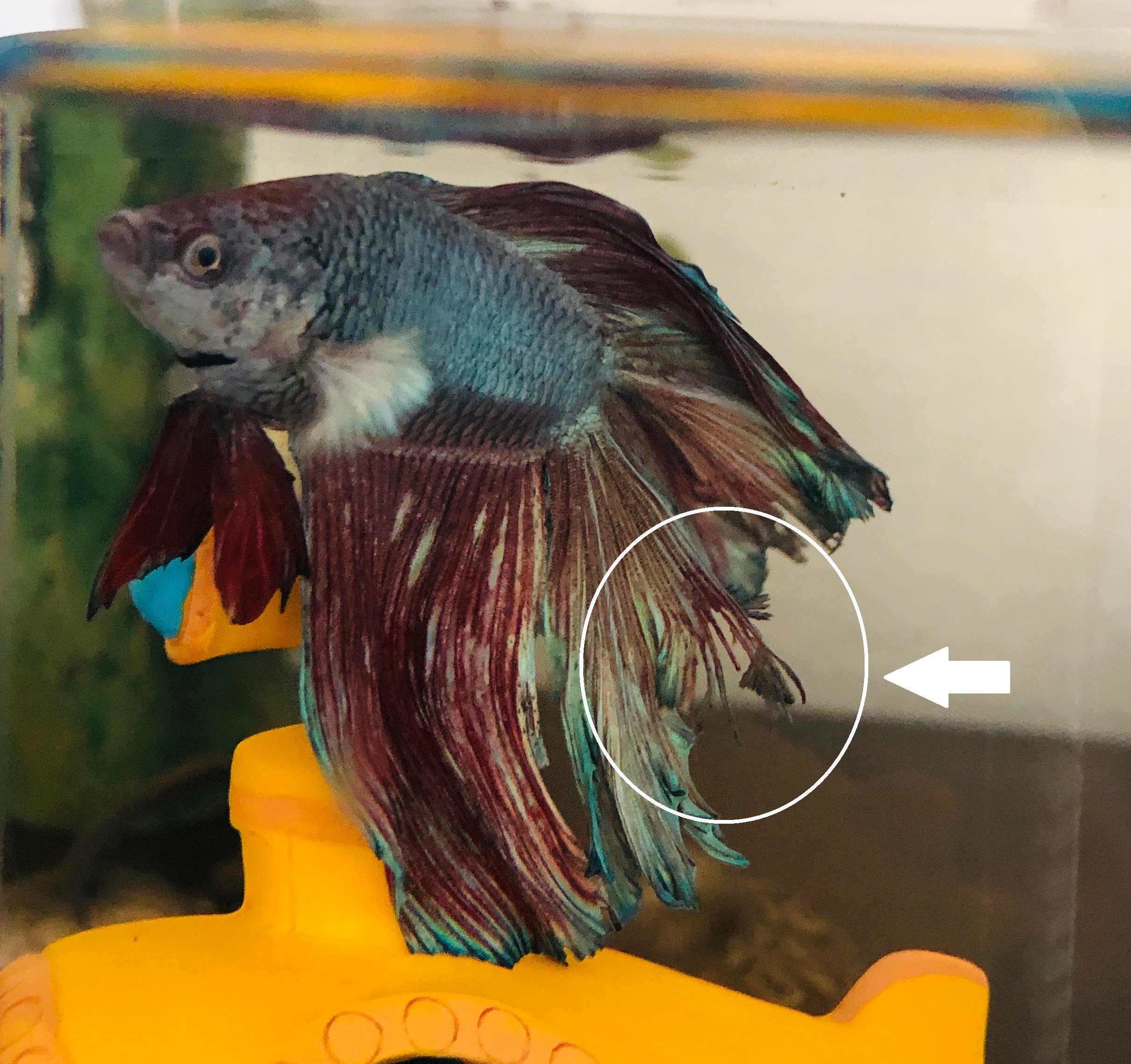
• Fin Biting: distinct, clean, semi-circular or U-shaped chunks missing from the tail, appearing abruptly overnight. There is zero black or red necrosis; the edges are sharp and clean. It predominantly strikes male Halfmoon and Rosetail bettas due to heavy finnage fatigue, high filter current, boredom, or confined tank stress.
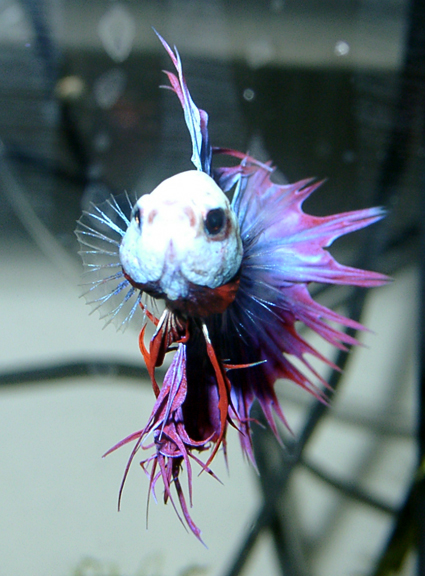
• Mechanical Tears: clean longitudinal splits running between individual rays. Usually caused by sharp hardscape or intake grates. The Community Pantyhose Test: gently rub standard nylon pantyhose over every artificial ornament or piece of driftwood. If the fabric snags, it will shred your fish's fins guaranteed.
Real Reddit Case Studies (Before & After)
Case 1 (Rescue from a retail cup): An r/bettafish member rescued a cup-bound betta with fins burned to stubs by ammonia. Rather than harsh chemicals, the betta was acclimated to a cycled 8-gallon tank at 27 °C (80 °F) with 0 ammonia, 0 nitrite, and Indian almond leaf tannins. Within 4 weeks, fin area rebounded by 85%.
Case 2 (Antibiotic disaster in main display): A hobbyist dosed a broad-spectrum antibiotic directly into their community tank. The medication destroyed the beneficial biofilter, causing an acute ammonia spike (NH3 > 2.0 ppm) within 48 hours that chemical-burned the gills, mimicking severe respiratory distress seen in ich infestations. Emergency 50% water changes saved the fish.
Sign of Recovery: What is the 'Clear Edge'?
The most frequent panic post from beginners concerns a thin, transparent or frosted glassy film forming along frayed fin tips. New keepers routinely mistake this for fungal fuzz (Saprolegnia) and reach for toxic medications.
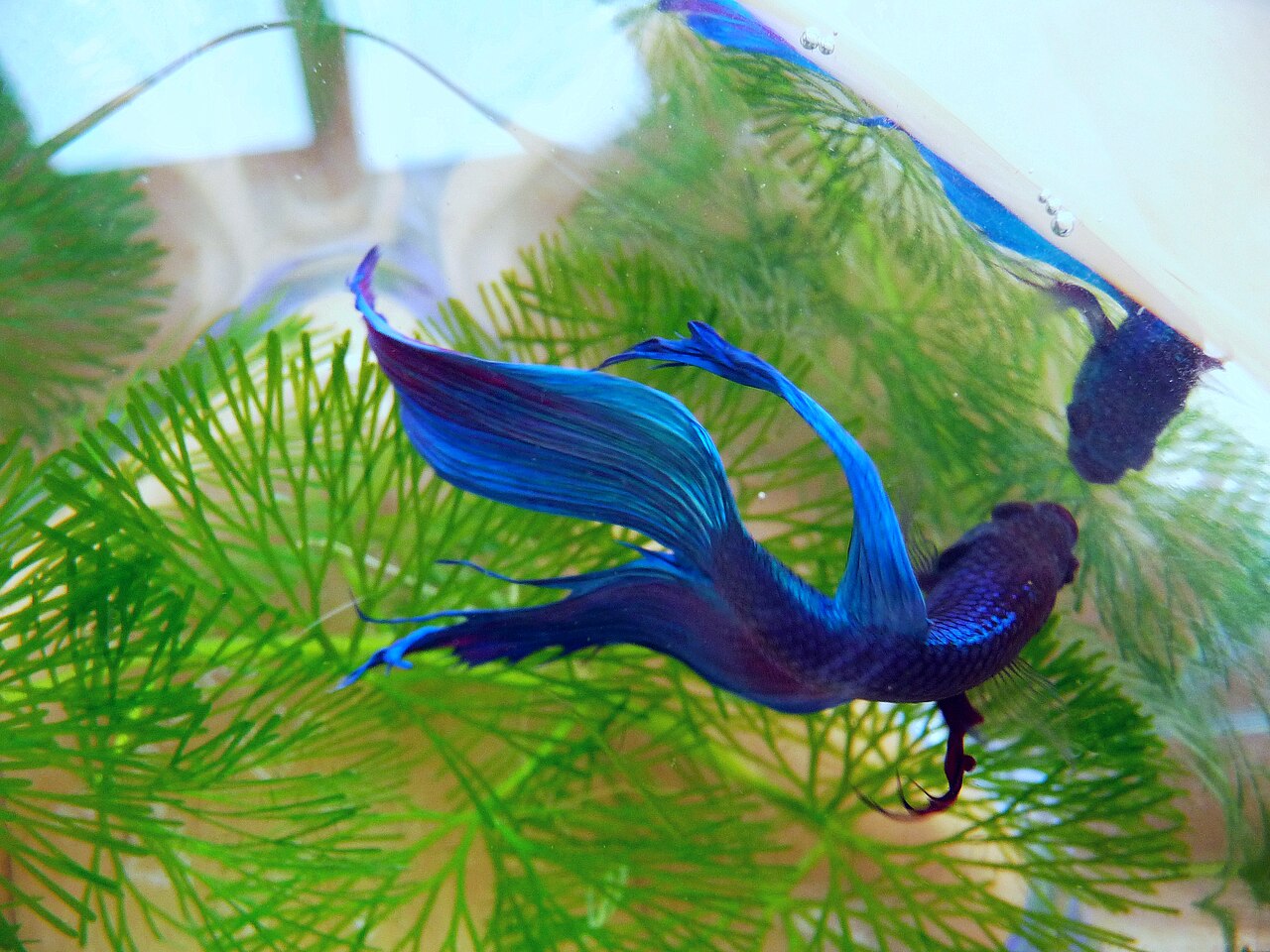
In reality, this clear glassy border is young regenerating fin blastema. It initially lacks color pigments and looks like transparent cellophane. Pigment cells naturally migrate into the new tissue over 2 to 3 weeks. If you observe clear tips, your fish is healing! Dosing harsh cures at this stage will chemical-burn the delicate new growth.
The Lethal Hazard of Melafix and Bettafix
A primary warning across r/bettafish and veterinary forums involves tea tree oil medications (Melaleuca cajeputi), sold under names like Melafix and Bettafix. Though marketed as gentle herbal remedies, they pose grave risks to labyrinth breathers.
Oils do not dissolve in water; they collect in an oily surface film. Labyrinth organ fish (bettas, gouramis) breathe air directly from the water surface. The hydrophobic oil coats and irritates the delicate labyrinth lamellae, causing suffocation and organ trauma. Never use tea tree oil preparations on labyrinth fish.
Step-by-Step 21-Day Recovery Protocol
• Step 1. Warm, pristine water: maintain steady 26–28 °C (79–82 °F) to accelerate cellular mitosis. Perform 20–25% partial water changes every 2 to 3 days using temperature-matched dechlorinated water. Pristine water resolves 90% of mild to moderate fin rot cases without any chemical drugs.
• Step 2. Indian Almond Leaves (Catappa): natural botanical conditioners rich in tannins and humic acids. They naturally suppress bacterial colonies, lower pH gently, and turn water into an amber biotope that reduces cortisol stress.
• Step 3. Salt dip baths (Severe fin-base rot only): if rot invades the fin rays right to the body musculature, transfer the fish to a short 10-minute bath in a separate container using pure aquarium salt (1 tsp per gallon / 4 L), under constant supervision.
FAQ
- Will the fins grow back to their original length?
- Yes, provided the damage has not invaded the base of the rays and body musculature. In warm, pristine water (26–28 °C / 79–82 °F), regrowth typically takes 4 weeks to 3 months depending on fish age and diet.
- Can hydrogen peroxide or potassium permanganate be dosed?
- No, never dose these harsh oxidizers directly into the tank. They cause acute chemical burns to gill filaments and incinerate delicate regenerating fin blastema cells.
- How quickly should the first signs of recovery appear?
- Once the root cause is resolved (clean water, removing sharp decor), active necrosis halts within 48 to 72 hours. A clear glassy regrowth margin emerges within 5 to 7 days.

Scientific board — ichthyologists and veterinarians
Ichthyologists and veterinarians with university degrees · Reference FishBase, Seriously Fish and peer-reviewed literature · Sign every reviewed article with their credentials shown

PhD in ichthyology, researcher of African Great Lakes cichlids
PhD in ichthyology, University of Edinburgh · Field research in Malawi, Tanganyika and Victoria (2013–2018) · 12+ peer-reviewed publications on cichlid behaviour
Sources
- Reddit r/bettafish Community Wiki & Care Sheets · r/bettafish Community · 2026-05-22
- FishBase — Fin Rot Symptoms & Bacterial Pathogens: Aeromonas & Pseudomonas · FishBase · 2026-05-22
- Untergasser, D. — Handbook of Fish Diseases: Fin and Tail Rot · TFH Publications · 2026-05-22
- Seriously Fish — Betta splendens Husbandry & Environmental Stress · Seriously Fish · 2026-05-22