How to Fishless Cycle an Aquarium with Ammonia (Step-by-Step)
The humane, scientifically proven fishless cycling guide: exact pure ammonia dosing calculation, nitrite spike timeline, and the 24-hour clearance test.
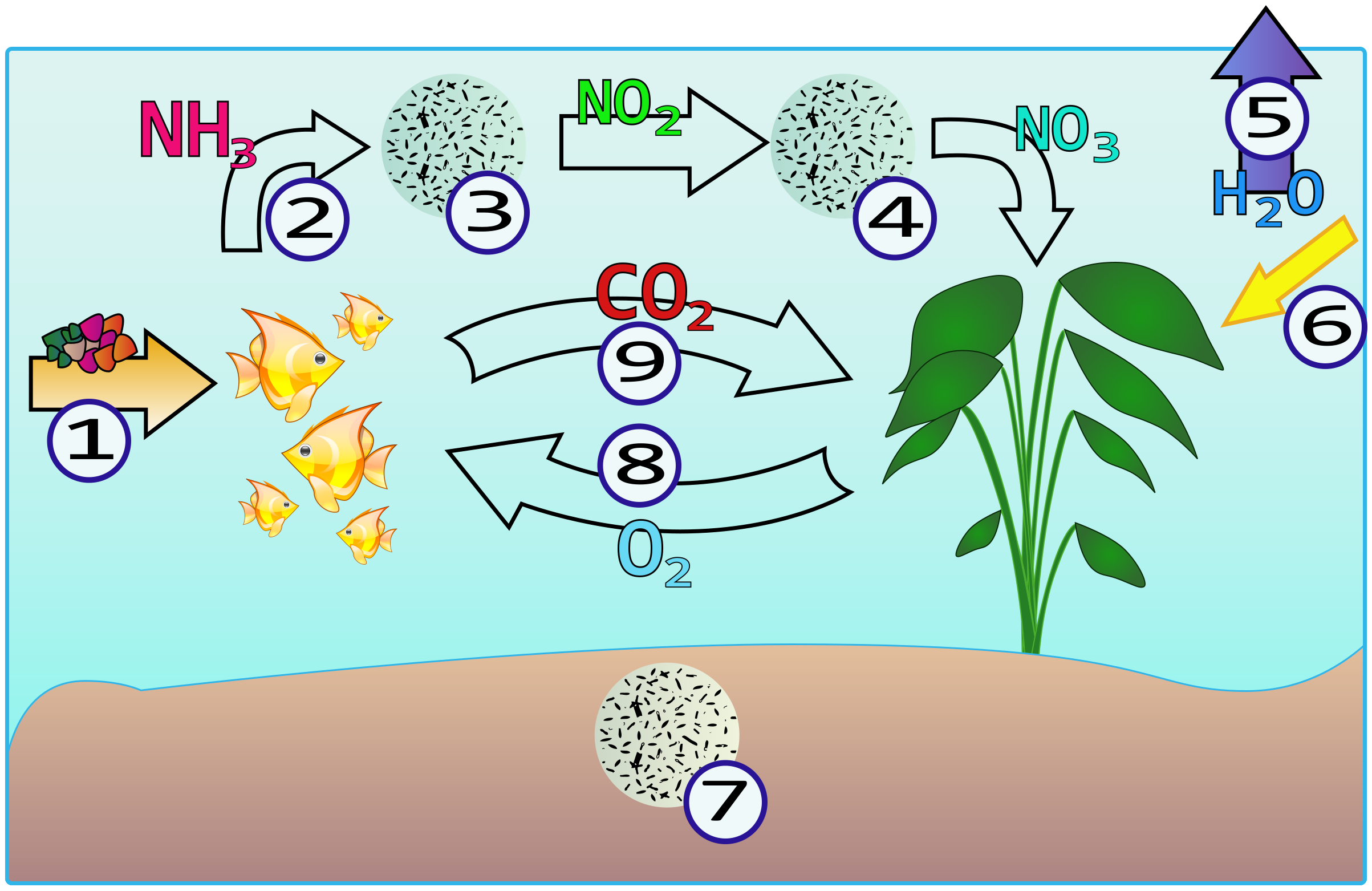
In a fishless cycle, you act as the waste source: by dosing a precise amount of pure liquid ammonia (or ammonium chloride) into an empty running aquarium, you feed and multiply Nitrosomonas and Nitrospira bacteria inside your filter sponge until they can process 2.0 ppm of ammonia into harmless nitrate every 24 hours.
Exact Pure Ammonia Dosing Calculation (Targeting 2.0–3.0 ppm)
Fishless Cycling Day-by-Day Timeline & the 24-Hour Clearance Test
| Phase & Days | Liquid Test Readings (NH3 / NO2 / NO3) | What Happens Inside the Filter | Your Action Plan |
|---|---|---|---|
| Phase 1: Days 1–5 (Lag Phase) | NH3: 2.0–3.0 ppm | NO2: 0 | NO3: 0 | Pioneer Nitrosomonas bacteria attach to biomedia and divide every 15–20 hours | Dose ammonia once to 2–3 ppm, set heater to 27–28 °C, run aeration at max. Do NOT add more ammonia yet! |
| Phase 2: Days 7–14 (The Nitrite Spike) | NH3 drops < 0.5 | NO2: 2.0–5.0+ ppm | NO3: 0–5 | Nitrosomonas colony is established and rapidly oxidizes ammonia into toxic nitrite (NO2-) | Whenever ammonia drops below 0.5 ppm, redose back to 1.5–2.0 ppm to keep Nitrosomonas fed |
| Phase 3: Days 14–24 (Nitrate Climb) | NH3: 0 | NO2 falling | NO3: 20–40+ ppm | Nitrospira bacteria multiply and convert toxic nitrite into nitrate (NO3-) | Check pH and KH every 3 days (if pH drops below 6.5, buffer with baking soda so bacteria don't go dormant) |
| Phase 4: Days 25–30 (24-Hour Clearance Test) | 24h after dosing 2 ppm: NH3 = 0 AND NO2 = 0! | Your biofilter can process a full fish bioload every single day | Perform a large 50–70% water change to drop nitrates below 20 ppm, lower heater to 24–25 °C, and add your fish! |
How to Speed Up a Fishless Cycle to 7–10 Days
1. Seeded Filter Media: Squeezing a sponge or transferring ceramic rings from a healthy, disease-free established aquarium directly into your new filter introduces millions of mature bacteria, cutting cycle time to 5–7 days. 2. Bottled Nitrifying Bacteria: Adding concentrated live nitrifiers (FritzZyme TurboStart 700, Seachem Stability, or Tetra SafeStart) alongside 2.0 ppm ammonia at 28 °C (82 °F) accelerates nitrite clearance down to 7–12 days.
FAQ
- Should I do water changes during a fishless cycle?
- Normally, no—leave the water alone until the cycle finishes. You only need a 30–50% water change during cycling if: 1) You accidentally overdosed ammonia above 5.0 ppm or nitrite spiked off the chart (>5.0 ppm), or 2) Your pH crashed below 6.5. Once your tank passes the 24-hour clearance test, perform one large 50–70% water change to remove accumulated nitrates before adding fish.
- Should I keep aquarium lights on during a fishless cycle?
- If you do not have live plants in the tank yet, keep the lights OFF! Nitrifying bacteria thrive in the dark, whereas high ammonia (2–3 ppm) combined with bright light triggers explosive green water and hair algae blooms. If your tank is already planted, limit lighting to 6 hours per day.
- Why did my pH drop below 6.5 and stall the nitrogen cycle ('pH crash')?
- Nitrification is an acid-producing process: for every 1 ppm of ammonia oxidized, bacteria consume roughly 7.1 ppm of carbonate alkalinity (KH). In soft tap water, KH hits zero and pH crashes below 6.2, putting Nitrosomonas and Nitrospira into dormancy. Dose 1 teaspoon of baking soda (sodium bicarbonate) per 50 liters (13 gallons) or do a 30% water change to restore KH and raise pH back to 7.2–7.6.

Goldie editorial team
Practising aquarists with a combined 30+ years of experience · Biologists and editors, fact-checking against FishBase and Seriously Fish · Every piece is reviewed by a qualified ichthyologist before publication
PhD in ichthyology, researcher of African Great Lakes cichlids
PhD in ichthyology, University of Edinburgh · Field research in Malawi, Tanganyika and Victoria (2013–2018) · 12+ peer-reviewed publications on cichlid behaviour
Sources
- DrTim's Aquatics — Fishless Cycling Guide & Ammonia Dosing Instructions · DrTim's Aquatics · 2026-10-25
- 2hr Aquarist — How to Cycle a Tank Properly (Fishless Method) · 2hr Aquarist · 2026-10-25