Winter Fish Kill Prevention: Pond Aerator Depth, De-Icer vs Heater & Aquarium Winter Care | Goldie
Prevent catastrophic winter fish mortality. Critical aerator placement depth (never at the bottom), acoustic shock of ice breaking, indoor holding tanks, and winter power outage protocols.
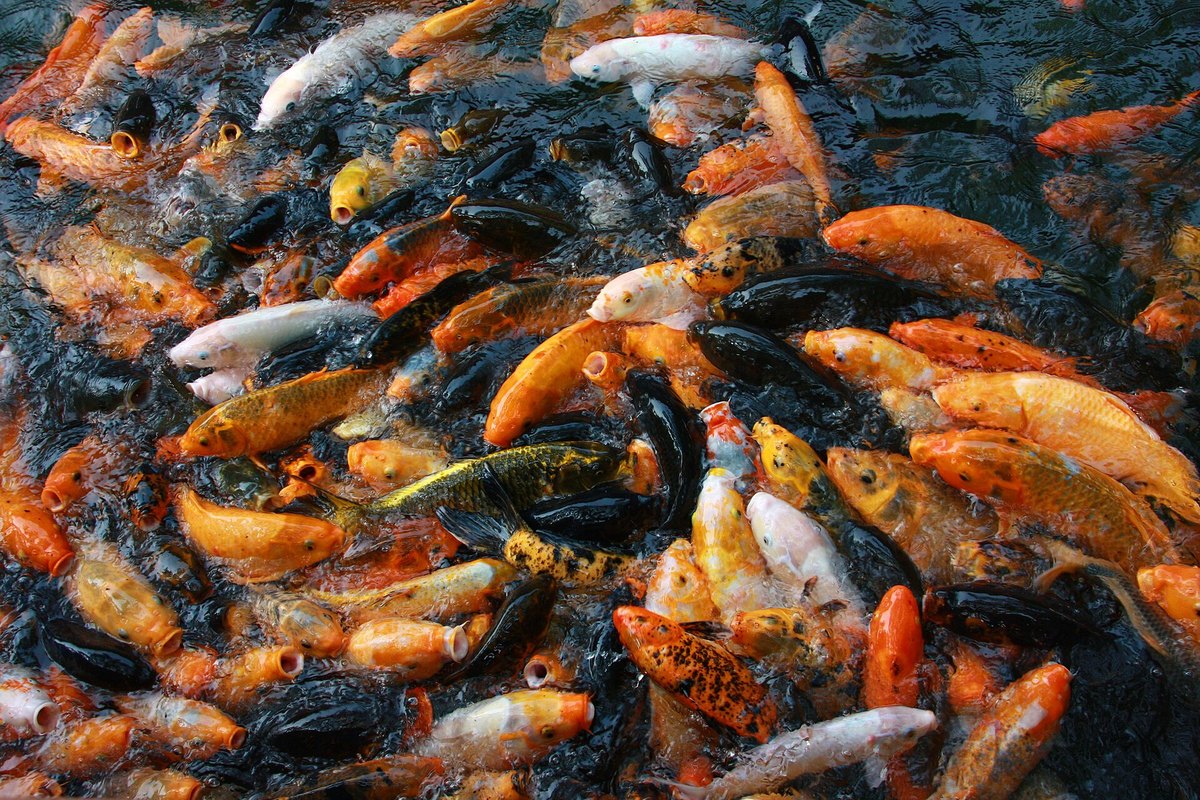
Winter is statistically the deadliest season for both outdoor ornamental ponds and indoor home aquariums. Every spring, thousands of koi and goldfish keepers discover catastrophic losses beneath melting ice—often misattributing the tragedy to 'freezing,' when in clinical reality over 85% of winter mortalities are caused by hypoxic gas poisoning (winterkill), thermal destratification from mispositioned aerators, or acoustic barotrauma.
To protect ectothermic fish, you must distinguish healthy winter torpor (metabolic depression at +2…+5°C where heart rate drops to 4–8 beats per minute and digestive enzymes shut down) from hypoxic winterkill. Once thick ice becomes blanketed with snow, photosynthetically active radiation (PAR) drops to zero: algae and submerged plants stop producing oxygen. Meanwhile, heterotrophic bacteria decomposing autumn leaves, fish waste, and benthic sludge consume remaining dissolved oxygen (O₂ < 2 mg/L) while releasing lethal hydrogen sulfide (H₂S), methane (CH₄), and carbon dioxide (CO₂) trapped beneath an airtight ice cap.
1. Outdoor Ponds: +4°C Water Physics & Two Fatal Mistakes
Freshwater exhibits a life-saving physical anomaly: it reaches maximum density (999.97 kg/m³) at exactly +4°C (39.2°F). As air temperatures plunge below zero, lighter 0°C water rises and freezes at the surface while the heaviest +4°C water sinks into the deepest basin—the overwintering refuge zone. Respecting this stratification is the foundation of pond survival.
Fatal Mistake #1: Dropping the Aerator Diffuser to the Pond Bottom
Scientific fact: Placing an air stone or water pump on the bottom of a winter pond triggers powerful vertical bubble-plume convection. It lifts the +4°C refuge water up against the 0°C ice sheet and drives supercooled meltwater downward, homogenizing the entire pond to 0…+0.5°C. At sub-1°C temperatures, koi suffer osmoregulatory failure and gill-lamellae micro-crystallization, freezing to death within 48 hours.
Fatal Mistake #2: Breaking Pond Ice with an Axe or Sledgehammer
Water is virtually incompressible, transmitting acoustic shockwaves at ~1,480 m/s—more than four times faster than air. Striking a frozen pond with an axe, crowbar, or sledgehammer unleashes a violent hydraulic pressure wave directly into torpid fish resting below. Clinical necropsy of shock-killed koi reveals ruptured swim bladders, hemorrhaged lateral-line neuromasts, and shattered inner-ear otolith membranes.
Safe de-icing method: Place a metal pot filled with boiling water directly onto the ice surface and let thermal conduction melt a smooth cylindrical vent hole without a single vibration—or direct a gentle stream of warm dechlorinated water onto one spot.
Equipment Comparison: Energy Efficiency & Ice-Vent Reliability
| Equipment Type | Power Draw | Operating Principle & Frost Limit | Clinical Verdict |
|---|---|---|---|
| Floating Pond De-Icer | 150–300 W | Thermostatically controlled ring melts a localized point vent for H₂S/CO₂ degassing even at -20°C. | Reliable emergency backup for severe freezes; pair with shallow air stone. |
| Winter Diaphragm Air Compressor | 20–40 W | Continuous micro-bubble plume from 30–40 cm depth with insulated non-freezing hose. | Most energy-efficient primary system (runs 24/7 at 1/8th heater cost). |
| EPS Polystyrene Ice-Free Hood | 0 W (Passive) | Floating insulated foam dome traps rising water warmth to shield vent down to -10°C. | Ideal passive thermal shield when combined with a 20 W air diffuser. |
Pond Winterization Calculator: Volume, Ice Aeration & Freezing Risk
Calculate actual pond water volume by basin profile, required winter air pump output to keep a gas-exchange hole open, and safe diffuser placement depth.
Suspend the airstone strictly at 30–40 cm (12–15 inches) below the surface — NEVER on the pond bottom! Placing a diffuser on the bottom destroys thermal stratification and chills the +4°C (39°F) winter refuge layer.
Rule of thumb: ~0.1 L/h of air per 1 L of pond water to vent toxic H₂S/CO₂ gases without supercooling
Recommended Hardware
Ultra-Quiet Hang-On-Back (HOB) Waterfall Filter
Sponsored / Affiliate link
Ultra-Quiet Mini USB Aquarium Air Pump
Sponsored / Affiliate link
2. Indoor Overwintering of Pond Fish (Garage, Basement & Shed)
Outdoor overwintering is unsafe if your pond is shallower than 1.0–1.2 meters (3.3–4 ft) in regions where ground frost penetrates deeply, or if you keep juvenile Tosai, weakened convalescent fish, or high-value show koi. In these cases, move fish indoors before autumn water drops below 10°C.
Choosing a holding vessel: Use heavy-duty collapsible PVC Koi Holding Vats or 1,000 L food-grade IBC totes with the top plastic panel cut open and sharp edges sanded smooth. Always secure a tight jump net over the rim—koi frequently leap during the first 72 hours in unfamiliar quarters.
The Indoor Temperature Trap: 10–14°C Sweet Spot vs Cold Biofilters
An unheated garage or basement held steady at 10–14°C (50–57°F) is ideal, but many keepers fall into a lethal nitrogen-cycle trap:
• Below 8°C (46°F): Gut motility and proteolytic enzymes stop completely—never feed (review the full autumn cutoff chart in our Pond Fish Winter Feeding & Ice Guide). • At 12–15°C (54–59°F): Fish swim actively, beg for pellets, and excrete toxic ammonia (NH₃) across their gills—yet autotrophic Nitrosomonas bacteria in your biofilter metabolize ammonia up to 4× slower at 12°C than at 24°C! Control ammonia with liquid tests every 48–72 hours, partial temperature-matched water changes, KH ≥ 5 dKH, and cold-adapted nitrifying bacterial cultures.
3. Home Aquariums in Winter: Central Heating & Freezing Blackouts
Indoor tropical aquariums face three silent winter killers during the central-heating season:
1. Radiator proximity overheating: Tanks placed within 1 meter of central-heating radiators suffer daytime thermal spikes (+29…+31°C) and dissolved oxygen depletion, followed by steep night drops. 2. Winter 'shock ventilation' drafts: Opening a window wide in sub-zero weather sends a sheet of freezing air across the warm (+26°C) aquarium surface. Anabantoids (Betta splendens, gouramis, paradise fish) gulp atmospheric air into their vascularized labyrinth organ, developing acute tissue inflammation, lethargy, and secondary bacterial infections. Always keep a tight-fitting lid closed when airing rooms! 3. Dry air evaporation & TDS osmotic shock: Winter heating drops indoor humidity below 25–30%, accelerating tank evaporation. Because pure H₂O evaporates while calcium, magnesium, and salts remain behind, topping off evaporated volume with tap water steadily concentrates hardness (TDS creep) and triggers osmotic shock. Top off evaporated water strictly with Reverse Osmosis (RO) or distilled water!
Field-Tested Winter Pond & Aquarium Survival Gear
Verified low-temperature aeration, thermostatic de-icing, bottom-zone temperature monitoring, and blackout backup hardware.
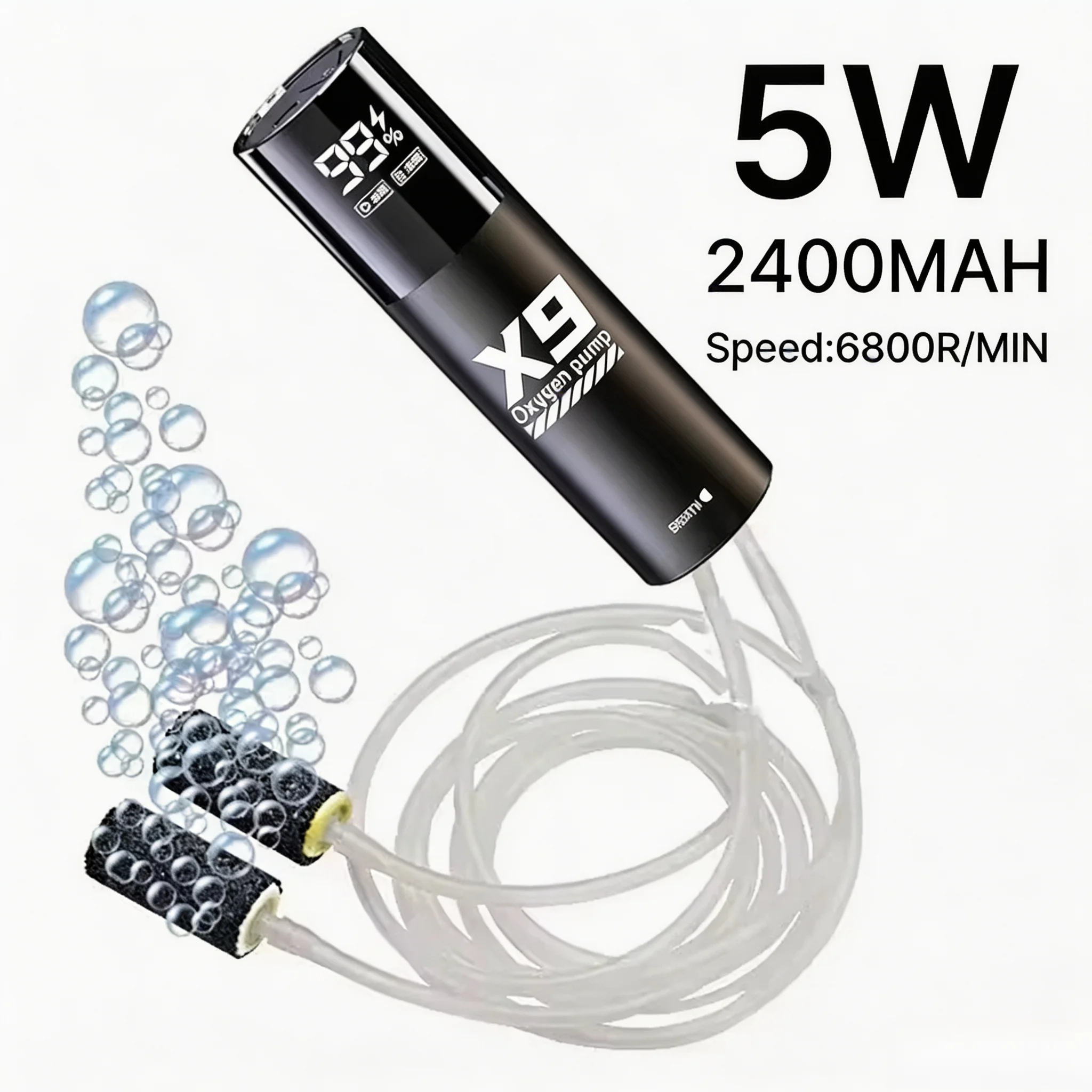
Rechargeable USB Aquarium Air Pump (2400mAh Backup)
Emergency Battery-Powered USB Air Pump (AC/DC Dual Mode)
Automatic switch to battery during winter power cuts. Up to 24h continuous aeration.

Commercial Heavy-Duty Pond Aerator (25W–45W)
Hailea Electromagnetic Pond Air Compressor (ACO Series)
Durable aluminum housing for sub-zero weather. Maintains surface ice hole without disturbing bottom layer.

Floating Pond De-Icer with Thermostat
Thermostatic Floating Pond De-Icer (Auto <41°F / +5°C)
Energy-efficient ice melter. Keeps toxic gas vent open without overheating surrounding water.

Digital Submersible Probe Thermometer
TPM-10 Waterproof Probe Digital Water Thermometer (2m Cable)
Measure true water temperature at the bottom of the hibernation zone.
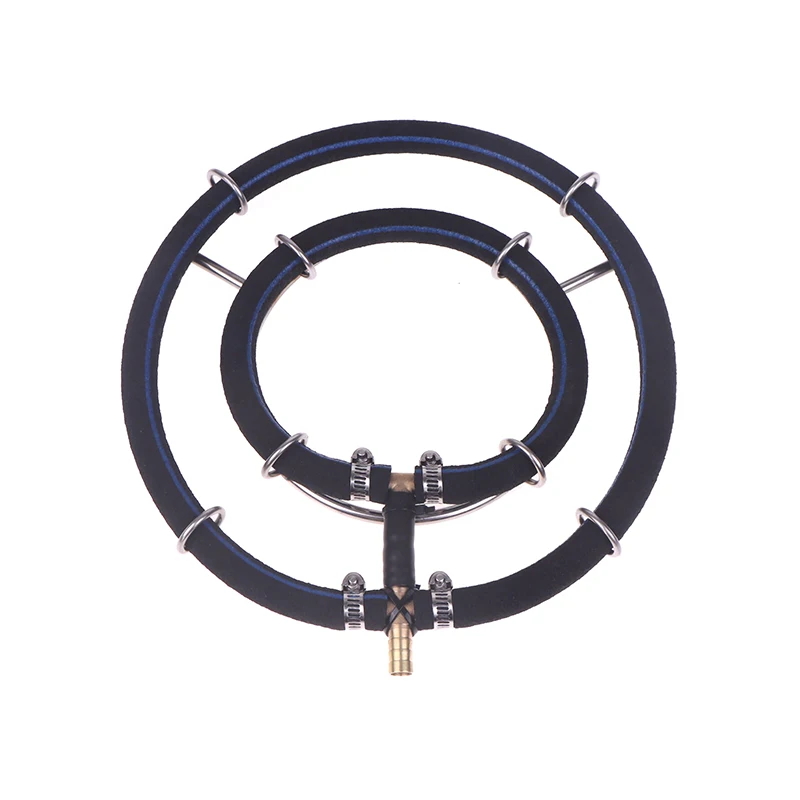
304 Stainless Steel Nano Aeration Disc
Corrosion-Proof 304 Stainless Steel Fine Bubble Disc
Heavy-duty diffuser ideal for shallow 30–40 cm suspension.
4. Post-Thaw Inspection & Clinical AI Diagnosis
Cold stress elevates cortisol and suppresses mucosal immunoglobulin production in fish skin. As water warms after a winter thaw or power outage, opportunistic water molds (Saprolegnia) rapidly colonize frost-stressed tissue—see our clinical protocol on Saprolegnia Cotton-Wool Fungus Treatment and verify your spring equipment sizing in the Pond Volume & Winter Aeration Power Calculator.
Aquarium First-Aid Kit & Water Tests
7-in-1 Aquarium Water Test Strips (pH, NO2, NO3, GH, KH, Cl2)
Sponsored / Affiliate link
Submersible Aquarium Heater with Adjustable Thermostat
Sponsored / Affiliate link
Digital LCD Precision Aquarium Thermometer
Sponsored / Affiliate link
Submersible Aquarium UV Sterilizer & Clarifier Pump
Sponsored / Affiliate link
FAQ
- Can I place the pond aerator diffuser on the bottom of the pond in winter?
- No—never place an air stone or pump on the pond bottom in winter. Rising bubbles create vertical convection that destroys the dense +4°C (39.2°F) bottom refuge layer, mixing it with 0°C ice water and supercooling the entire pond. Always suspend the diffuser strictly 30–40 cm below the water surface.
- What should I do if my outdoor pond freezes over completely?
- Never smash the ice with an axe, hammer, or metal bar—incompressible water transmits acoustic shockwaves that rupture koi swim bladders and damage inner-ear otoliths. Instead, place a metal pot filled with boiling water directly onto the ice until it melts a clean gas-exchange hole, then maintain it with a floating de-icer or shallow 30–40 cm air stone.
- Down to what air temperature can koi overwinter outdoors?
- In properly constructed ponds deeper than 1.2 meters (4 feet) with an open gas-exchange vent and undisturbed stratification, healthy koi safely survive severe sub-zero winter frosts (-20°C to -30°C air temperature) as long as the bottom refuge zone remains stable above +3°C to +4°C.
- How do I protect a tropical home aquarium if the power goes out in winter?
- Immediately wrap the tank in foil thermal blankets, foam board, or thick fleece (retains up to 70% of heat), float sealed plastic bottles filled with warm (40–45°C, never boiling) water, connect a battery or USB powerbank air pump to maintain oxygen, and enforce a strict zero-feeding fast until power returns.

Ichthyopathologist, Clinical Fish Pathologist & Author
40+ years in ornamental & pond fish pathology and microscopy · Author of 'The New Illustrated Guide to Fish Diseases' · President of Ornamental Fish International (OFI), 2006–2016

Aquascaper, IAPLC top-ranked finalist, specialist in Southeast Asian biotopes
Top-ranked IAPLC finalist (International Aquatic Plants Layout Contest) · 20+ years designing freshwater aquariums · Member of the Aquascaping Society of Japan
Sources
- Bassleer, G. — The New Illustrated Guide to Fish Diseases in Ornamental Tropical and Pond Fish · Bassleer Biofish · 2026-11-01
- Merck Veterinary Manual — Management, Thermal Stratification, and Overwintering of Ornamental Pond Fish · Merck Veterinary Manual · 2026-11-01
- Associated Koi Clubs of America (AKCA) — Winter Koi Care, Gas Exchange & Indoor Holding Tanks · AKCA · 2026-11-01