Sunshine Peacock Cichlid
Aulonocara baenschi · family Cichlidae
Also: Benga Yellow Peacock, Nkhomo Reef Peacock, Aulonocara baenschi
Parameters
- Temperature
- 24–28 °C
- pH
- 7.5–8.4
- Hardness
- 10–18 °dGH
- Tank volume
- from 200 L
- Maximum size
- up to 13 cm
- Group size
- min 4, ideal 6
- Temperament
- Peaceful
- Swimming zone
- Bottom
- Difficulty
- Intermediate
- Lifespan
- 6–10 years
Description
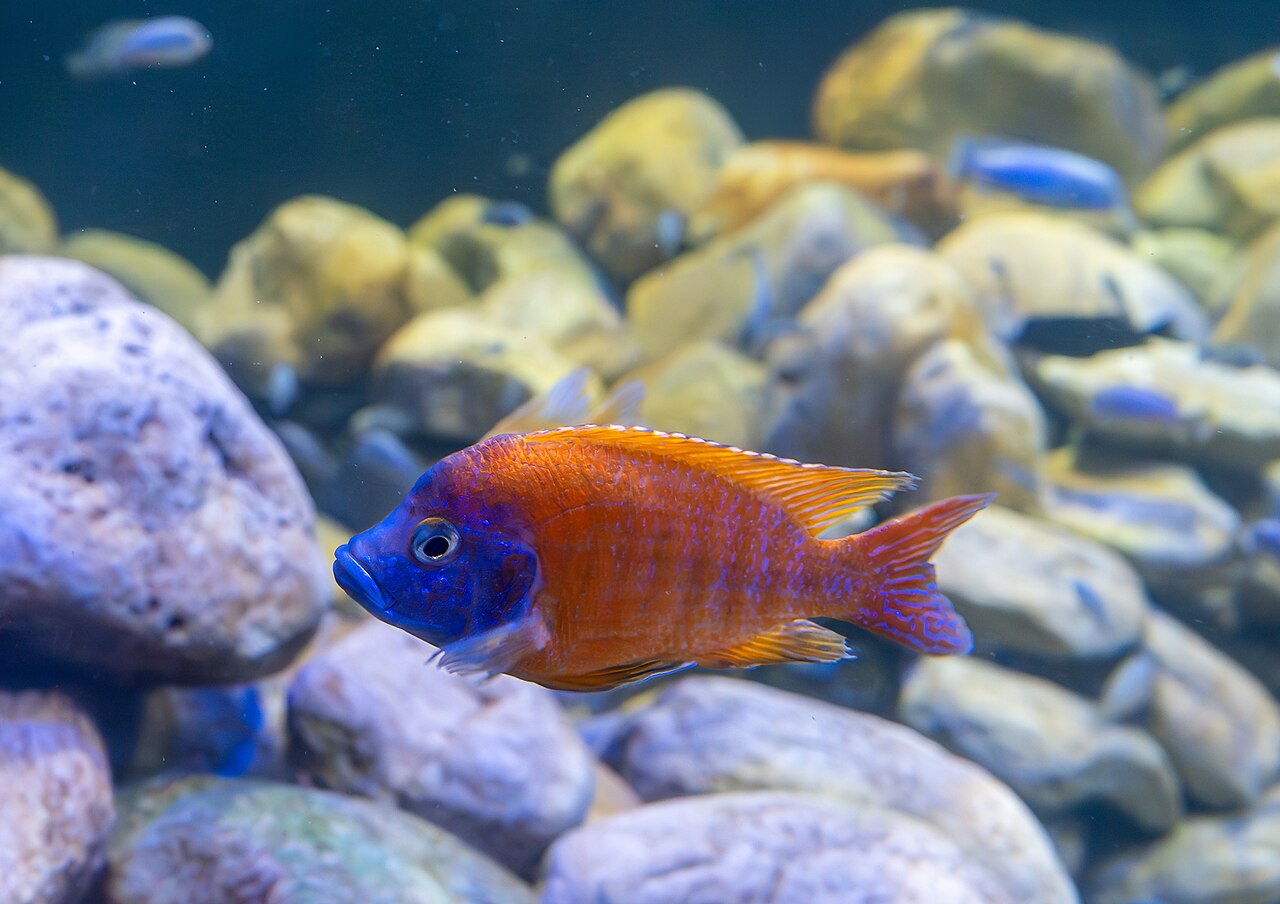
The Sunshine Peacock (Aulonocara baenschi) is a show-stopping yet peaceful Lake Malawi cichlid (11–13 cm). Dominant males radiate blazing canary-gold across their flanks while their cheeks and snout flash electric cobalt-blue. Equipped with enlarged cephalic lateral-line pores on the lower jaw, they hover like sonar detectors over open sand to locate buried invertebrates.
Care
Provide a 200L+ aquarium (24–28 °C, pH 7.5–8.4, GH 10–18) featuring wide open expanses of fine smooth sand (0.5–1 mm grain size for gill-sifting) bordered by rocky caves. Avoid housing them with hyper-aggressive Mbuna like Auratus or Demasoni, which stress Peacocks into losing their color; pair instead with peaceful Yellow Labs or fellow Peacocks/Haps under strong canister filtration.
Feeding
Carnivorous sand-sifter: feed sinking cichlid pellets, mysis shrimp, krill, brine shrimp, daphnia, and cyclops, supplemented with natural carotenoids/spirulina to maintain deep golden-yellow pigmentation.
Breeding
Harem maternal mouthbrooder (1 male to 3–4 females); females incubate 20–35 eggs for 21–24 days. Avoid housing multiple *Aulonocara* species with identically looking silver-brown females to prevent hybridization.
Compatibility
- Good
- Avoid
- Avoid
- Avoid
FAQ
- Why hasn't my male Sunshine Peacock colored up yet?
- Juvenile males take 7–10 months (reaching 6–8 cm) to develop full yellow and blue adult coloration, and subordinate males stay drab if bullied by a tank boss.
- What substrate is required for Peacock cichlids?
- Fine, smooth sand (0.5–1.2 mm) is mandatory because Aulonocara constantly sift mouthfuls of sand through their gills; sharp gravel damages their gill filaments.

Goldie editorial team
Practising aquarists with a combined 30+ years of experience · Biologists and editors, fact-checking against FishBase and Seriously Fish · Every piece is reviewed by a qualified ichthyologist before publication

Scientific board — ichthyologists and veterinarians
Ichthyologists and veterinarians with university degrees · Reference FishBase, Seriously Fish and peer-reviewed literature · Sign every reviewed article with their credentials shown
Sources
- FishBase: Aulonocara baenschi · FishBase · 2026-05-22
- Seriously Fish: Aulonocara baenschi · Seriously Fish · 2026-05-22